
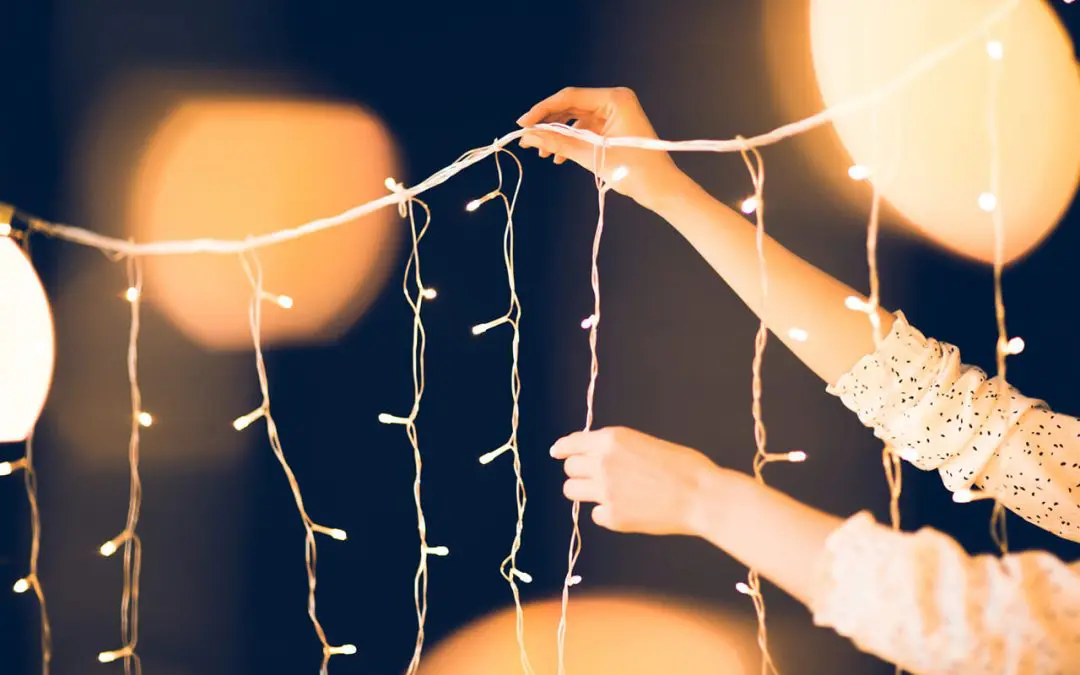
Few things make a neighborhood feel as festive as a house covered in holiday lights, but decorating also sends thousands of people to the emergency room every year, and electrical problems cause house fires. The good news is that the risks are largely preventable with a bit of planning. In the Chattahoochee Valley, where mild weather tempts many homeowners to decorate early, a careful setup protects your family, your roof, and your electrical system. Here’s how to hang holiday lights safely and enjoy them all season.
Inspect and Choose the Right Holiday Lights
Before you hang anything, check every strand. Look for frayed wires, cracked sockets, loose connections, and broken or missing bulbs, and discard damaged sets instead of repairing them. Look for a safety listing mark such as UL, and use lights labeled for outdoor use outside, since indoor-only strings aren’t built for moisture. LED lights use far less electricity than older incandescent ones, stay cooler, and let you connect more strands end to end, but always check the label for the maximum number of strands. Test each string on the ground before you climb a ladder, so you don’t discover a dead section after the work is done. Keep spare bulbs and fuses in a labeled box, and replace them only with the correct type.
Plan Your Power and Protect Your Circuits
Plan where your holiday lights will plug in before you start hanging. Outdoor outlets should be protected by a GFCI, which shuts off power if it detects a ground fault, and you should use a weatherproof cover on the outlet. If your outlet isn’t GFCI protected, use a portable GFCI adapter. Sketch where each strand will run and which outlet powers it, so you can see whether any circuit will be overloaded. Don’t overload a circuit. A 15 amp circuit can handle about 1,800 watts, but it’s wise to stay under about 80 percent of that, and remember that other devices may share the same circuit. Use heavy-duty outdoor extension cords, never run them under rugs or through closed doors, and use connection covers or raised spots to keep plugs out of puddles. A timer or smart plug on each outdoor circuit makes it easier to turn everything off at once.
Hang Holiday Lights Without Damaging Your Home
Use clips designed for gutters, shingles, and siding, and make sure they fit your surface, since the wrong size can slip and leave cords dangling. Choose clips instead of nails, staples, or tape, which can damage surfaces and pierce wire insulation. Set your ladder on level, firm ground, keep three points of contact, and don’t overreach. Have a helper hold the ladder, and never climb in wet or windy weather. Stay at least ten feet from power lines, and use a wooden or fiberglass ladder near any wiring. Wear gloves and non-slip shoes, and think about using a pole with a hook for high spots instead of climbing onto the roof. Measure the area first, so you buy the right number of strands and don’t stretch cords tight.
Indoor Trees, Decorations, and Takedown
Indoors, choose a fresh tree and keep its stand filled with water, since dry trees ignite quickly. Place it away from fireplaces, heaters, candles, and vents, and don’t block exits. Artificial trees should be labeled flame resistant. Use lights rated for indoor use, and don’t staple or nail cords. Turn off holiday lights when you leave the house or go to bed, or put them on a timer so you don’t have to remember. Don’t plug multiple strands into one power strip, and keep candles well away from the tree and decorations. When the season ends, wind strands on a reel or piece of cardboard, label them, and store them in a dry place, which prevents the tangles and damage that cause most strand failures.
Frequently Asked Questions (FAQs)
How many light strands can I connect together?
Check the label on the strand. LED strings usually allow many more connected sets than incandescent ones, but the maximum varies by brand, so never guess.
Can I leave lights on overnight?
It’s better not to. Use a timer so lights shut off automatically, which saves electricity and reduces the risk of overheating or a fire.
Do I need GFCI protection for outdoor lights?
Yes. Outdoor outlets should be GFCI protected, and you can use a portable GFCI adapter if yours isn’t. Test it monthly with its built-in button.
How can I find a burned-out bulb?
A small light tester can help you find the dead bulb or loose connection. Replace bulbs with the correct type and wattage, and discard strands with damaged wires.
Is it safe to hang lights when it’s raining?
No. Wet surfaces make ladders slippery and increase shock risk. Unplug the lights and wait until everything is dry before working.
Home Inspectors of Columbus provides inspections to homebuyers and sellers in the Chattahoochee Valley of Georgia. Contact us to request an appointment for our services.